
- News
Trois jeunes chercheurs rejoignent le GPR PSL FAn
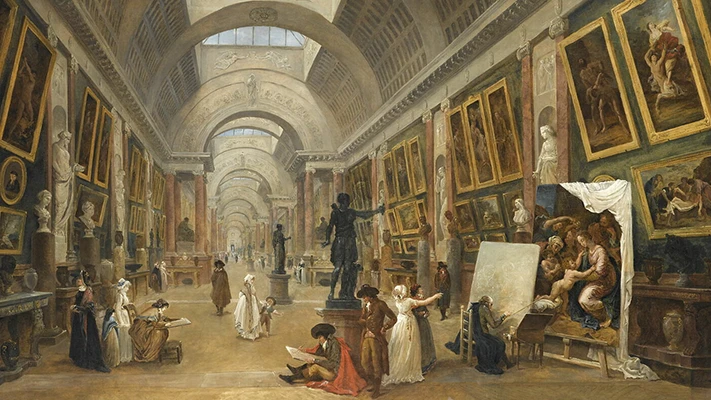
Maëva Moal and Dione Mérida, doctoral fellows, and Rémi Bois, a postdoctoral fellow in the “Museums” program, will join FAn on October 1, 2026.
Rémi Bois
After earning his degree from the École du Louvre with a major in “Oriental Archaeology,” Rémi Bois went on to earn a master’s degree in “Civilizations, Cultures, and Societies” from the EPHE-PSL. His research thesis, written there under the supervision of Wouter Henkelman, focused on the topic of satrapal administration in the Achaemenid Persian Empire. This work was expanded upon in his doctoral dissertation (“Social Classes and Ideology in the Achaemenid Persian Empire”), which he defended in June 2026 at the EPHE-PSL (also under the supervision of Wouter Henkelman). Since 2024, R. Bois has been a research fellow at the Sarikhani Center for Elamite Studies, housed at the EPHE-PSL, where he is contributing to the preparation of a dictionary of Achaemenid Elamite. In addition to his research, R. Bois also teaches a seminar on “Works in the Collection” at the École du Louvre.
Maëva Moal
Maëva Moal holds a Master’s degree in “Art History and Archaeology” (Archaeology track) from the École Pratique des Hautes Études, following a Bachelor’s degree in History (Geography track) from the University of Western Brittany. During her first year of the Master’s program, she researched boundary-marking practices in Gaul during the Early Roman Empire. During her second year of the Master’s program, she studied everyday practices in urban spaces based on the excavation known as the “Cinéma de Chartres / Autricum,” also dating to the Early Roman Empire, under the supervision of William Van Andringa. As a contract doctoral student in PSL’s major research program “Les fabriques de l’antique,” she is preparing a dissertation that builds on her Master’s research, titled: “Shaping the City in Daily Life: Urban Practices, Temporalities, and Representations of the Roman City of Autricum (Chartres),” under the supervision of Christophe Morhange and William Van Andringa. This project aims to renew the approach to the ancient city by making a twofold shift. On the one hand, it shifts the focus of analysis from the monumental to the everyday, focusing on the micro-phenomena observable in the streets, sidewalks, facades, and entrances. On the other hand, it challenges traditional chronological divisions (Augustan, Flavian, etc.), which tend to freeze the city into successive states, in favor of an interpretation based on processes and intertwined temporalities. In this context, she employs tools for the analysis and spatial representation of urban transformations, drawing on field experience gained primarily in Saint-Bertrand-de-Comminges and during internships at the Jean Bérard Center in Naples.
Dione Mérida
Dione Mérida, who holds a degree in Anthropology (with a concentration in Ethnology) from Paris Nanterre University, has pursued an interdisciplinary career path following a dual bachelor’s degree in History and Life Sciences at Sorbonne University. During her first master’s degree in heritage studies at Paris Saclay, she wrote a thesis on the history of archaeology and the heritage designation of the Maya site of Copán (Honduras), under the supervision of Cécile Coquet-Mokoko (IECI). Following this research, a new line of inquiry emerged regarding the current situation of the Ch’orti’ Maya, descendants living near the site. Under the supervision of Valentina Vapnarsky (CNRS, LESC) and Cédric Becquey (UNAM, LESC), she wrote a thesis titled “The Multivocality of the Maya Ruins of Copán (Honduras): Ch’orti’ Perspectives,” a study at the intersection of anthropology and heritage studies, highlighting the diverse narratives of local communities regarding the site: stories passed down to children, testimonies from Ch’orti’ workers, and activist discourses. She is currently preparing a doctoral dissertation as part of the PSL FAn Research Group, under the supervision of Valentina Vapnarsky, director of studies at EPHE-PSL. Titled “No sólo somos de piedra”: Reappropriations of the Past, New Rituals, and Heritage Sites in Ch’orti’ Maya Activism (Honduras and Guatemala), this dissertation analyzes the connections between heritage sites and Ch’orti’ Maya activism. This dissertation aims to examine how the pre-Hispanic past and material remains are appropriated-reinterpreted, reconstructed through discourse and ritual, and mobilized—to legitimize political and cultural claims. This analysis will seek to account for the multivocal nature of discourses—both activist and non-activist—as well as the various forms of historical construction, evident not only in discourses but also in the ways in which people interact with these artifacts. More broadly, this research aims to contribute to a deeper understanding of the relationships between Indigenous societies and heritage sites in postcolonial contexts by examining the modes of (re)interpretation and construction of collective identities through heritage.
Illustration: Hubert Robert, “Design for Illuminating the Museum Gallery Through the Vault and for Dividing It Without Obstructing the View of the Room’s Extension,” also known as “Design for the Transformation of the Grand Gallery,” 1796, RF 1975 10, Department of Paintings, Louvre Museum.