- News
Les Fabriques de l'antique in Oxford: a look back at the FAn Spring School (23–27 March 2026)
From 23 to 27 March 2026, the ‘Fabriques de l'antique’ Spring School took place in Oxford in partnership with the Maison Française d'Oxford.
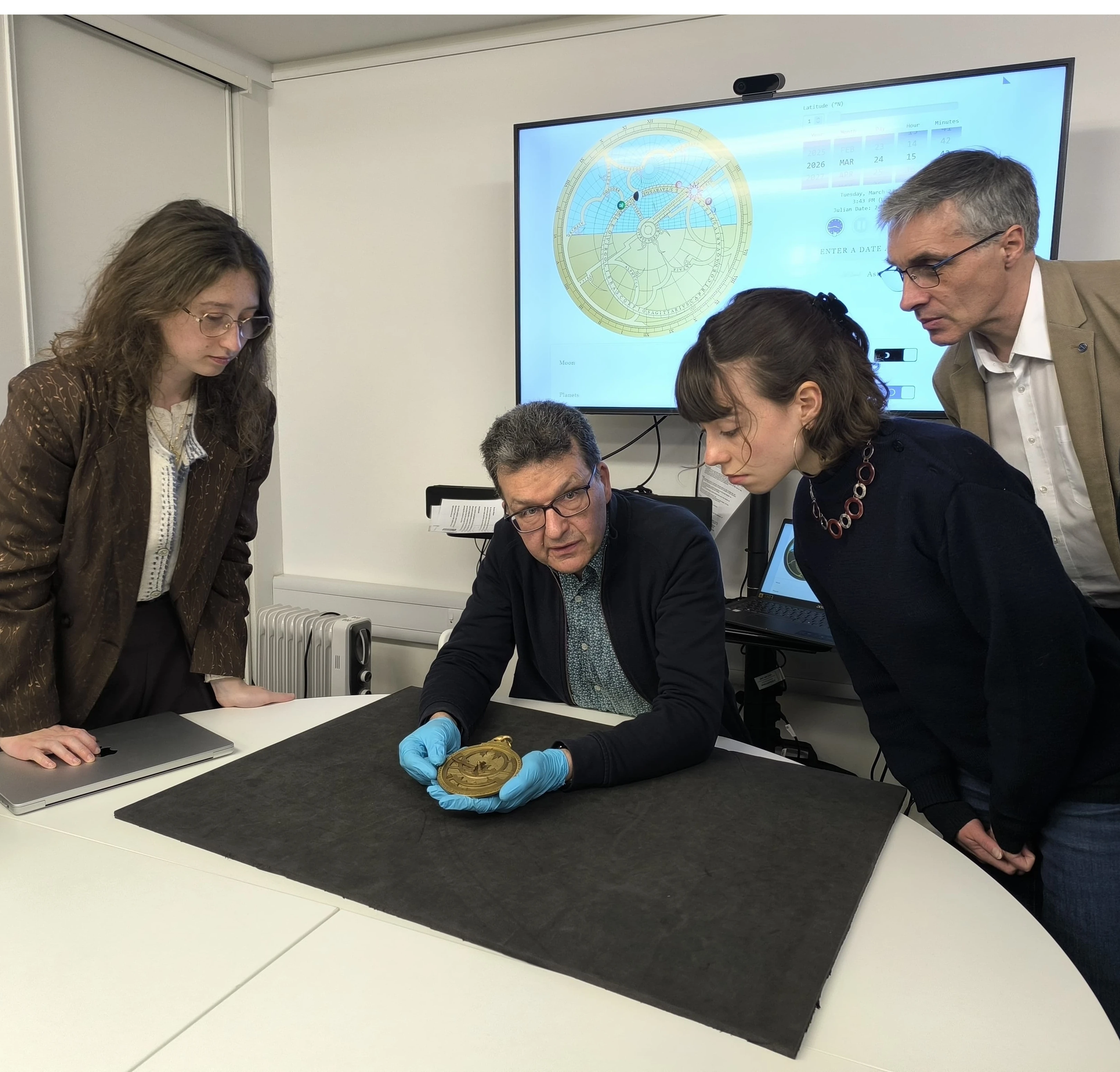
From 23 to 27 March 2026, the PSL Major Research Programme ‘Les fabriques de l’antique’ (FAn), in partnership with the Maison Française d’Oxford (MFO), organised a spring school bringing together 13 Master’s and PhD students from the PSL community. They were supported by a teaching team comprising the heads of research areas within the PSL FAn Research Programme: Matthieu Husson (Observatoire de Paris-PSL), Olivier Delouis (CNRS) et Daniel Petit (ENS-PSL et EPHE-PSL).
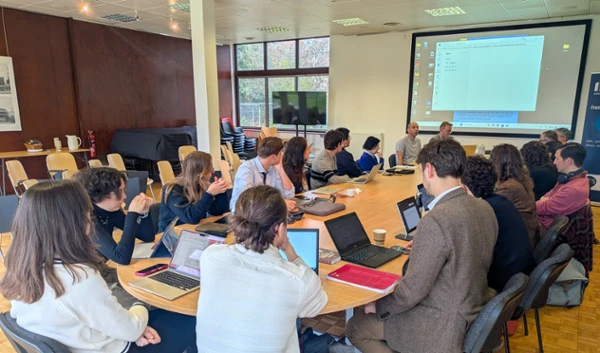
The first day was devoted to the presentation of the students’ research and how it relates to the research areas of the GPR PSL FAn:
- Irénée Cabrera Belmar (M2 at EPHE-PSL supervised by Sylvie Peperstraete): Singing of Flowers in the Aztec Empire: Practical Poetry in Philosophical and Religious Life under the Triple Alliance, from 1428 to the Spanish conquest.
- Edmond de Taillac (M2 at ENS-PSL, supervised by Charlotte Guichard): Śiva’s Last Dance: Gabriel Jouveau-Dubreuil, the archaeology of South India and the emergence of an Indian art market
- Junjie Du (PhD at EPHE-PSL supervised by Isabelle Charleux and Costantino Moretti): The Intersection of Buddhism and Death: Visual Representations of the Afterlife in Buddhist and Funerary Art from the First Half of the Tang Dynasty (618–781)
- Sophie Fabre-Hoffmeister (PhD at EPHE-PSL/FAn supervised by François Quantin): Spaces and monuments of heroic cults in the Greek world: the materiality of communal memory from the Archaic to the Hellenistic periods
- Timothée Fouquet (EPHE-PSL/CNRS PhD supervised by Laurent Coulon): Recruitment, hierarchy and organisation of the Egyptian clergy during the Saite period: the case of the Theban priesthoods in relation to the cults of the regional capitals
- Térence Fournié (PhD at EPHE-PSL supervised by William Van Andringa): Archaeology and urban destruction: the development of a discipline (1958–1983)
- Mairi Kotsakou (EPHE-PSL diploma supervised by Vassa Kontouma): Magic in the Hellenic world: evidence from nomocanonical sources
- Maxime Létoffé (M2 at EPHE-PSL, supervised by Robert Hawley and Anne Canavo): Religious dynamics in Cyprus during the Classical period: a Cypriot koinè?
- Miguel Lo Bue (EPHE-PSL diploma supervised by Francesca Prescendi Morresi): A Study of Consus and the Consualia: A God of Foundation and Counsel?
- Corentin Luneau (PhD at the University of Tours/French School in Rome, supervised by Manuel Royo): Collecting for oneself, displaying for others
- Emilie Poiré (PhD at EPHE-PSL/FAn supervised by Ioanna Rapti): Between Antiquity, Byzantium and the Renaissance: re-examining the legacy of the illustrated Byzantine manuscript in the West during the 15th and 16th centuries
- Pablo Ramalhosa (M2 at EPHE-PSL, supervised by François Queyrel): The founding myths of the cities of the Syrian Tetrapole
- Philomène Renard Saltarello (PhD at EPHE-PSL supervised by Michel Hochmann): Giovanni Bellini and his workshop: work organisation, technique and materiality
Les journées suivantes ont été structurées autour des trois axes scientifique du programme FAn :
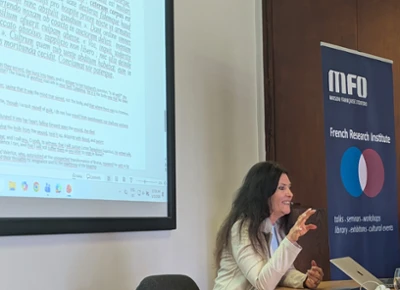
The session on 25 March, dedicated to the second axis of the programme, focused on the issue of the ‘deconstruction’ and ‘reconstruction’ of memory. Introduced by Olivier Delouis, it featured three presentations exploring the uses and constructions of the past in antiquity:
- John Baines (Oxford, emeritus, Queen's College): Approaching ancient Egyptian uses of the past through material evidence.
- Beate Dignas (Oxford, Somerville College): The Creation of the Past in Ancient Greece.
- Soazick Kerneis (Université Paris Nanterre - Maison française d’Oxford): Myth-Making in the Early Augustan Age and the Legitimisation of Augustus’ Family Reforms.
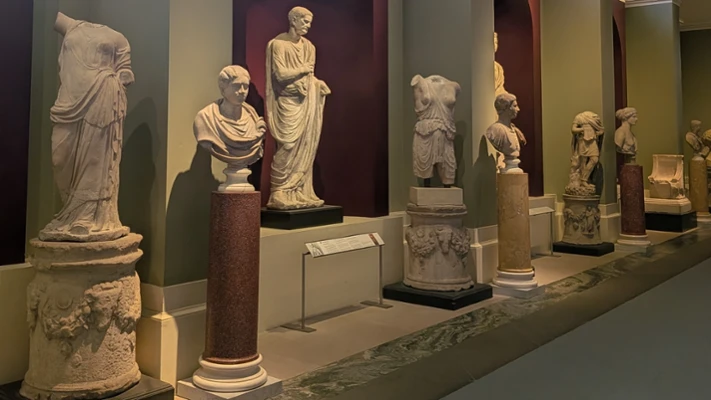
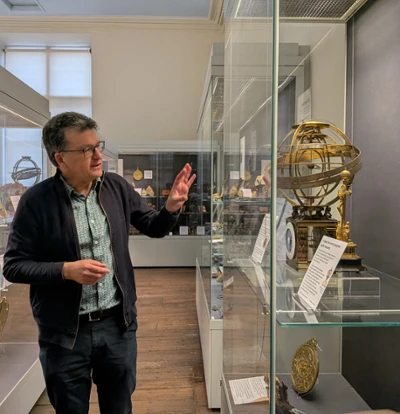
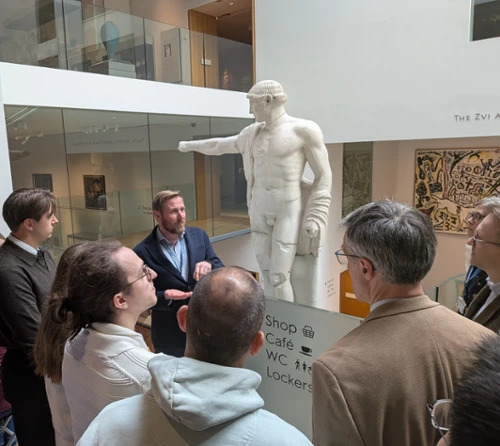
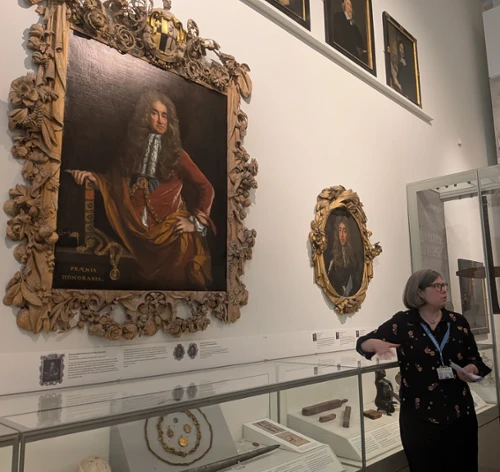
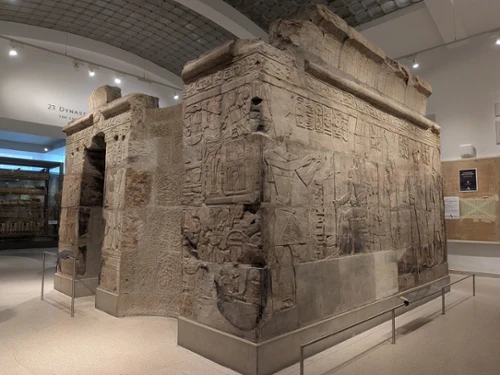
These lectures were followed by a tour of the Ashmolean Museum led by Liam McNamara, Chief Curator of the Department of Antiquities and an Egyptologist, and Eleanor Standley, Curator of the Medieval Archaeology Collections. Participants were treated to a presentation of the Ashmolean’s collections, particularly those devoted to ancient Egypt, Sudan and the medieval period, as well as the history of the museum, the formation of these collections and the curatorial choices guiding their display. This visit sparked a broader discussion on the challenges of museum mediation and on ways of presenting antiquity to contemporary audiences.
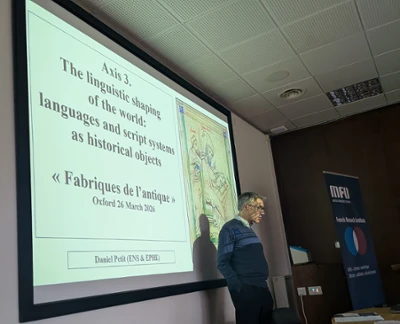
The final day was devoted to the third axis, focusing on the linguistic shaping of the world: languages and scripts as subjects of history. The morning began with an introduction and presentation by Daniel Petit, who offered reflections on internal reconstruction in historical linguistics using the example of the word ‘nox’ in Old Latin. Presentations by Philomen Probert (Professor of Classical Philology and Linguistics, Wolfson College, University of Oxford) and Simon Fries (Researcher in Comparative Philology, University of Oxford) then broadened the discussion, addressing respectively the Byzantine contributions to treatises on Greek dialects and ancient and modern approaches to language based on the transmission and philological criticism of Aristotle’s Categories. The day concluded with a visit to the Bodleian Library.